
How Arrest Warrants Work in Perry County
An arrest warrant in Perry County is a judge's order to take a named person into custody and bring them before the proper court. Complaint cases follow a set path. A neutral magistrate reviews sworn facts. Probable cause must show in those facts, and Alabama Rule of Criminal Procedure 3.1 also permits warrant or summons process after an indictment, so the paper can arrive at more than one stage. Where the incident happened decides where the report goes. Outside Marion or Uniontown, the Perry County Sheriff's Office takes the report. Inside a city, municipal police handle it. Felonies may pass from the municipality or a Sheriff investigator to the Perry County Circuit Clerk, but the judge or magistrate, never the investigating officer, makes the issuance call.
Perry County's Sworn Deposition Route
The Perry Magistrates and Warrants page lays out a homegrown route that begins with an incident report. For a Perry County misdemeanor, an investigator goes with the complainant to seek the warrant. A felony works differently. The municipality with jurisdiction, or a Sheriff investigator, coordinates with the Circuit Clerk's Office. Next comes the sworn step. The complainant is sworn in and completes what Perry County calls a deposition, unless an officer sends the material electronically. The magistrate tests it for probable cause. Applying costs nothing, the local page says. Free does not mean automatic. The magistrate can still decline when the sworn material falls short of the standard. Venue matters here too. A misdemeanor outside city limits ordinarily follows the Sheriff and magistrate route, while a Marion misdemeanor belongs in Marion Municipal Court unless it is a felony or has an exceptional jurisdictional basis. That split is why the location of the alleged event drives any Perry County arrest warrant trace.
Arrest Warrants: What They Contain
Perry County publishes no sample warrant for the public to inspect. The field inventory here is a schema drawn from Alabama Rule 3.2 and official forms. A real file may hold back items before service.
| Warrant or Case Number | An identifier such as CASE / WARRANT ID; Perry's exact public format is not published |
|---|---|
| Named Subject | A name or description sufficient to identify the person |
| Charge or Offense | The alleged offense stated in the warrant, not an inference from a generic list |
| Issuing Authority | The judge, magistrate, clerk, or designated official authorized for that type of process |
| Bond or Release Terms | Conditions may be stated, or judicial review may be required after arrest |
| Command and Return | Direction to arrest and bring the person before court, followed by service date and manner |
Alabama Arrest Warrant Form Index
The Alabama criminal-procedure forms index identifies the CR-58 warrant form, the CR-59 recall form, and the C-65a alias warrant form. Perry County filings use that state framework.
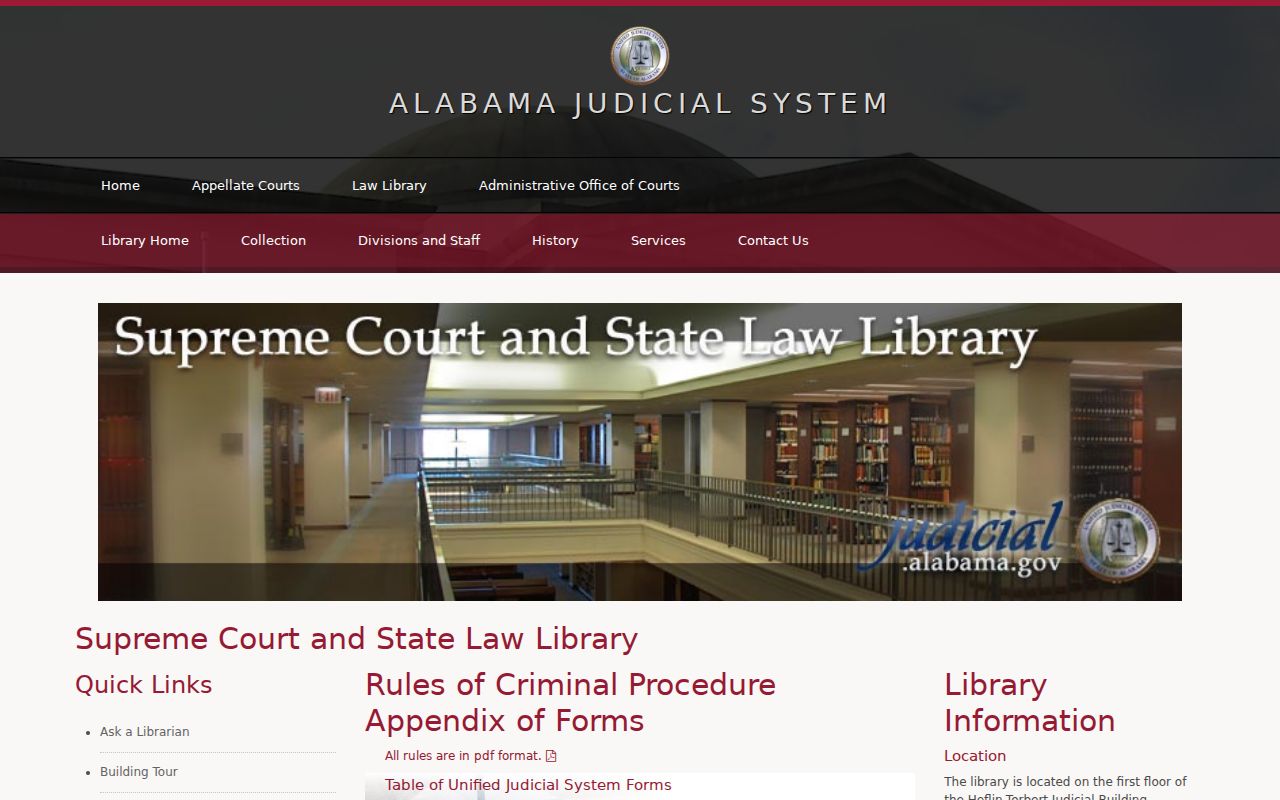
That index shows paperwork, not people. It is not a Perry County roster or any person's record, and the issuing court remains the source for a filed warrant and its current status.
How Warrants Get Served in Perry County
Under Alabama Rule 3.3, any authorized Alabama law-enforcement officer may execute an arrest warrant, and in Perry County, Sheriff's deputies handle county and unincorporated matters. Marion Police serve city process in Marion, and Uniontown Police handle local matters in Uniontown. Assignment and jurisdiction, not convenience, decide which agency acts. Perry County fields no constable or city marshal warrant unit. After the arrest, the officer returns the warrant noting the date and manner of service, and that return becomes part of the court record. Booking comes next. Then an initial appearance, and release or bond review. Perry County publishes no booking-to-magistration timetable. Nobody can honestly promise a set release time without a published schedule.
Who Serves Perry County Arrest Warrants
The agency named on the warrant is your best lead. Still, any authorized Alabama officer may execute it. These Perry County contacts help route questions, though they are not a complete service list.
| Agency | Supported Scope | Public Contact |
|---|---|---|
| Perry County Sheriff's Office | County and unincorporated warrants; local in-person confirmation route | 202 Pickens Street, Marion; (334) 683-6534; Sheriff page |
| Marion Police Department | Offenses and city process inside Marion | (334) 683-9072 through the city directory |
| Uniontown Police Department | Uniontown process; no separate warrant unit posted | 200 Front Street; (334) 581-5144 |
| Other Alabama officers | Execution where Rule 3.3 and assignment authorize it | Confirm with the issuing court or agency |
Arrest Warrants, Summonses, and Bench Warrants
Each paper calls for a different response. A Perry County arrest warrant authorizes custody once probable cause is found. A summons orders an appearance without an arrest. A bench warrant answers a missed duty in a case already open, so read the caption and call the issuing court before anything else.
| Feature | Arrest Warrant | Summons | Bench Warrant |
|---|---|---|---|
| What It Orders | Arrest and appearance before court | Appearance on the stated date | Arrest for a missed obligation or noncompliance |
| Basis | Probable cause or indictment process | A case that may proceed without initial custody | Failure to appear, pay, or comply |
| Who Issues It | Judge or magistrate under Rule 3 process | Court under the applicable procedure | Judge responsible for the existing case |
| How to Respond | Attorney, planned surrender, booking, and bond review | Appear as directed | Ask about reset, recall, appearance, or payment |
Unserved Perry County Warrants Stay Restricted
Perry County's access rule is blunt: the local Magistrates and Warrants page says an arrest warrant is not public until served. A blank search proves nothing. The county posts no searchable active list. Alabama runs no public statewide warrant portal either, so a quiet website is not evidence that no warrant exists.
Key Point: An unserved Perry County arrest warrant can exist even when no public name search or court copy reveals it.
Perry County's official direction is to appear in person at the Sheriff's Department. Call (334) 683-6534 first for current routing. Consider counsel before you go. Do not assume a phone employee can disclose an unserved record. A court-copy request works for served or accessible files, but it is no secret-warrant certification. Once service happens, the return shows when and how the warrant was executed. Other limits may still apply. Sealed, juvenile, youthful-offender, and protected records stay closed because the Alabama Open Records Law does not erase those court-specific confidentiality rules, so access turns on the actual file and its status.
Handling an Arrest Warrant in Your Name
Facing a warrant in your own name calls for a lawyer first, then two phone calls. The Perry County Sheriff's Office handles surrender, booking, and where a bond gets routed. The Circuit Clerk at (334) 683-6106, or the right municipal clerk, can pull up the court record and tell you the next setting. Ask whether an attorney may arrange a voluntary appearance. Ask where the person should report. Remember that bond is not a fix for the case itself; it only addresses release from custody. Perry County courts can set personal-recognizance, appearance, secured, cash, certified-funds, or surety terms under Alabama's framework, though no universal warrant bond chart is published here. A motion to recall or quash goes to the issuing judge. That judge, not the clerk, decides it.
Important: Talk with a lawyer before surrendering; an active Perry County arrest warrant can result in custody during any law-enforcement contact.
From Perry County Service to Court
An arrest, planned or not, starts the custody process rather than closing the case. Identity gets confirmed and booking follows. Then comes an initial appearance or another form of judicial review. Alabama Rule 4.3 frames how release is reviewed, including a 72-hour review when set conditions cannot be met, but it promises no specific Perry County release hour. Call the Sheriff or jail with practical questions. Where can bond be posted, which payment forms are accepted, and what identification is required? Ask the issuing court for the next date and get the case number. Keep every bond paper and court notice you receive. For a fuller picture of how the local offices fit together, the Perry County warrant records guide ties them together.